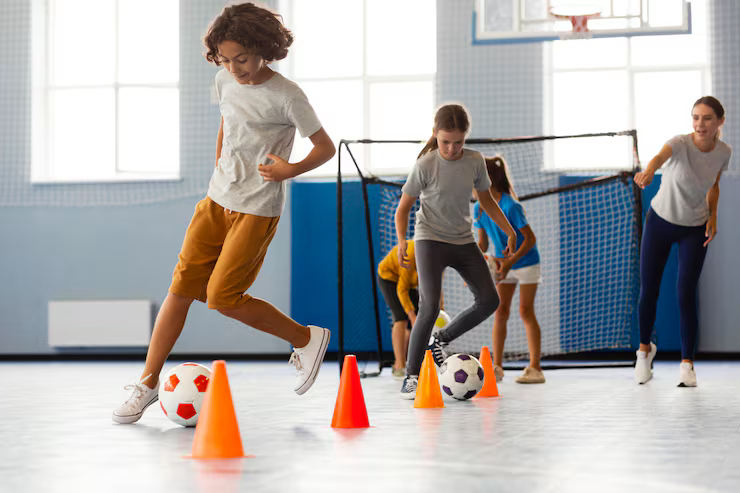
A Physical and Health Education Perspective
Education is changing, or at least, it needs to. Our classrooms and gym spaces are more diverse than ever in culture, language, ability, confidence, motivation, access, and lived experience. When I ask myself if we need to reimagine education, my answer is a clear yes, and I think Physical and Health Education (PHE) is one of the most important places to start.
PHE has real potential to support students in building confidence, connection, and a positive relationship with movement. At the same time, when it is taught using narrow or traditional approaches, it can become a space where students feel excluded or disengaged. Reimagining PHE means rethinking not just what we teach, but how and why we teach it.
In this post, I reflect on two frameworks that have shaped my thinking around reimagining PHE, Universal Design for Learning (UDL) and the BC Health and Physical Education Curriculum. I also explore common barriers educators face when trying to shift pedagogy and engage with current PHE resources and approaches, including Teaching Games for Understanding (TGfU).
Why Changing Pedagogy Is Not Easy
Although many educators recognize that change is needed, shifting pedagogy is not always straightforward. From my experience and observations, some of the most common challenges include limited time and heavy workloads, comfort with familiar practices, and a lack of consistent professional learning opportunities. Systemic constraints such as curriculum expectations, class size, facilities, and access to equipment also shape what is realistically possible in a PHE setting.
Despite these challenges, I believe the benefits of reimagining PHE far outweigh the discomfort that can come with change.
Framework One: Universal Design for Learning
Before diving into UDL, I recommend watching this short video by John Spencer, which clearly explains the idea behind universal design and how it came to be.
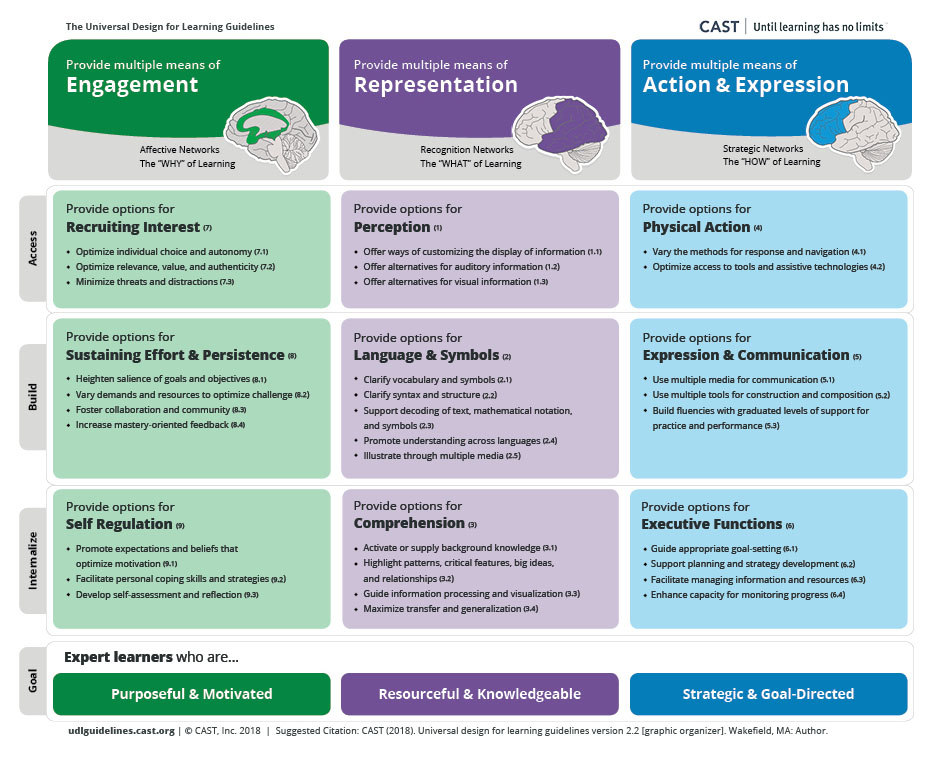
At its core, universal design is about creating environments that work for everyone. When barriers are removed for those who need the most support, everyone benefits. Universal Design for Learning applies this idea to education by asking teachers to plan for learner variability from the start, rather than adding accommodations later.
UDL is grounded in cognitive neuroscience and is built around three key principles, representation, engagement, and action and expression. Together, these principles encourage educators to design learning experiences that are accessible, challenging, and meaningful for all students.
Applying UDL in a PHE Setting
To make this more concrete, I want to consider how UDL could be applied in a PHE context using a soccer unit as an example.
Representation
In PHE, representation might involve using multiple ways to explain and demonstrate skills. This could include visual task cards with images or diagrams, live demonstrations paired with clear and simple verbal cues, and adaptive equipment such as different ball sizes, smaller goals, or modified playing areas.
When I was teaching at Rockheights Middle School, visual supports were especially helpful for ESL students who were hesitant to rely solely on verbal instructions. Providing multiple entry points made the activity feel more accessible and less intimidating.
Engagement
Engagement focuses on motivation and student buy in. In a soccer unit, this could involve offering choice through stations or roles within activities, encouraging students to set personal goals and track progress, and using small sided games to promote collaboration and decision making.
When students feel ownership over their learning, they are more likely to participate meaningfully and persist through challenges.
Action and Expression
UDL also asks us to rethink how students show what they know. In PHE, this might mean assessing teamwork, effort, and decision making rather than isolated skill performance, providing flexible timelines for skill development, and allowing students to reflect through video, peer feedback, or short written reflections.
This approach aligns closely with the BC Curriculum emphasis on CAPS, including cognitive, affective, psychomotor, and social learning.
Benefits and Considerations of UDL
UDL offers clear benefits such as increased inclusion, reduced stigma around accommodations, and greater student engagement. At the same time, it requires thoughtful planning and support. Without adequate time or professional development, there is a risk that UDL becomes a checklist rather than a meaningful shift in practice.
Age appropriateness is another important consideration. While UDL is relevant across grade levels, the amount of choice and autonomy should reflect developmental readiness. When digital tools such as video analysis are used, privacy and consent must be carefully considered, particularly when working with younger students.
Framework Two: The BC Health and Physical Education Curriculum
The BC Health and Physical Education Curriculum reflects a shift away from a purely performance based model toward a more holistic view of well being. Rather than focusing only on physical skills or fitness outcomes, the curriculum emphasizes lifelong health, mental well being, and social development.
A central component of the curriculum is the focus on Core Competencies, including communication, thinking, and personal and social responsibility.
These competencies are intended to be developed across subject areas, and PHE provides a particularly rich context for this learning.
Core Competencies in PHE
Communication is practiced constantly in PHE through teamwork, strategy, and peer interaction. Activities such as badminton or cooperative games require students to share ideas, listen actively, and adjust based on others. These skills support not only sport participation but also relationships and emotional well being.
Thinking skills are developed as students make decisions, solve problems, and reflect on what is working and what is not. In sports like tennis or pickleball, students must adapt strategies in real time. These experiences help build confidence and support a more positive relationship with physical activity.
Personal and social responsibility is also embedded in PHE. Students learn sportsmanship, accountability, and respect for others through team based challenges and shared goals. These experiences support empathy and self awareness.
Teaching Games for Understanding
One approach that strongly aligns with reimagined PHE is Teaching Games for Understanding.
TGfU shifts the focus away from isolated drills and toward learning through gameplay. Instead of teaching skills first and hoping students can apply them later, TGfU begins with modified games that highlight tactics, decision making, and purpose.
For example, rather than spending most of a lesson drilling passing techniques, students might begin with a small sided game designed to emphasize spacing or movement. Skills are then refined based on the challenges students encounter during play.
I am drawn to TGfU because it values thinking and understanding just as much as physical execution. It also supports differentiation, as students can engage with the same game at varying levels of complexity.
There are challenges to consider. TGfU can feel uncomfortable for teachers who are used to highly structured lessons, and assessing individual learning within dynamic game contexts can be complex. Younger students may also need additional structure and scaffolding to feel confident in open ended games.
Below is a project I did for a class last semester, drawing upon my personal experience teaching TGFU in the classroom and how beneficial it can be for all teachers to use and implement for their students.
Teaching Styles and Practical Resources
Two additional resources support reimagined PHE in practical ways.
The PE Project provides an overview of teaching styles ranging from direct instruction to guided discovery and problem solving. https://www.thepeproject.com/teaching-styles/

This resource reinforces the idea that no single teaching style fits every situation. Flexibility allows educators to respond to student needs, learning goals, and task complexity.
PHE Canada offers a large library of adaptable physical education activities. https://phecanada.ca/teaching-tools/physical-education-activities

This resource emphasizes inclusion and variety, making it easier for teachers to modify activities for different ages, abilities, and learning goals without starting from scratch.
Personal Reflections
As I continue exploring UDL, TGfU, and the BC Curriculum, I reflect on my own experiences in PHE—as both a student and a teacher candidate. I remember feeling that success in PHE was tied to natural athletic ability: if you were “good at sports,” it was enjoyable; if not, it could feel discouraging. That perspective stayed with me longer than I’d like to admit.
Working with students has challenged that assumption. I’ve seen how small shifts in structure, language, or choice can transform participation. When expectations are clear but flexible, and students feel safe to try without fear of judgment, effort increases, confidence grows, and the focus shifts from comparison to personal growth.
Reimagining PHE has also pushed me to reconsider my own teaching. Letting go of rigid lesson plans, trusting students with more autonomy, and embracing moments of uncertainty is not always easy—but often those moments bring the most meaningful learning, for both students and myself.
Redesigning PHE is not about lowering expectations; it’s about creating learning experiences that meet students where they are and support them in thriving. Frameworks like UDL, the BC Curriculum, and approaches such as TGfU encourage inclusion, understanding, and lifelong well-being. While these shifts require time, support, and reflection, they make PHE a space where all students feel capable, valued, and motivated to move.
I continue to reflect on questions such as how teachers can be better supported in making pedagogical shifts, what meaningful assessment looks like in student-centered PHE, and how to balance structure and flexibility to serve all learners.
Questions for Engagement
While many of the examples I have shared come from PHE, I see UDL as an invitation for reflection across all subject areas. I encourage my fellow teacher candidates to reflect on in their own contexts.
- How do students access information in your class?
- Who might be unintentionally excluded by the way content is presented?
- Where could visuals, models, exemplars, or multiple explanations support understanding?
References and Resources
BC Ministry of Education. Health and Physical Education Curriculum. https://curriculum.gov.bc.ca/
Hopper, T. Teaching Games for Understanding. OPHEA. https://ophea.net/playsport/teaching-games-understanding-tgfu-approach
PHE Canada. Physical Education Activity Database. https://phecanada.ca/teaching-tools/physical-education-activities
Spencer, J. When You Design for Everyone, Everyone Benefits from the Design. YouTube. https://www.youtube.com/watch?v=NL2xPwDrGqQ&t=102s
The PE Project. Teaching Styles in Physical Education. https://www.thepeproject.com/teaching-styles/
Leave a Reply