Teacher/Mentor/Coach/Life-long Learner

Category: weekly-reflection

Blog Post #8: Coding, Computational Thinking, and Gaming in Education

Computational Thinking as a Problem Solving Tool

Computational thinking is the process of breaking a problem into smaller parts, recognizing patterns, creating step by step instructions, and testing and revising when things do not work. When I think about it that way, it actually feels very aligned with teaching and learning. It is how I coach and how we help students improve in any subject.

This became most obvious to me when we talked about prompting AI. When you enter a vague prompt, you get a vague or unhelpful response. The tool is not mind reading. It responds to exactly what you give it. If the outcome is unclear, it usually reflects unclear input. The peanut butter and jam sandwich instruction video illustrates the same idea in a simple way. When the dad follows the directions exactly as stated, the result is a mess because the instructions lack precision. The humour works, but the deeper point is that we can only execute what we had been told.

That is what makes computational thinking so valuable. It forces you to slow down, clarify your intent, and organize your thinking into precise steps. When something does not work, it becomes feedback. It reveals where the thinking needs refinement.

In Physical and Health Education, this is not new. When teaching a complex movement, we do not just say “shoot the ball.” We break it down into components like foot placement, body position, timing, and follow through. If something is off, we isolate it, adjust, and try again.

Coding Beyond Math

I’ll be honest. When I hear the word coding, my first reaction is still not excitement. It feels technical and a bit removed from the kind of physical teaching I picture myself doing. But this week did give me some insight that coding is not really about the computer, but about deepening thinking. Additionally, before this week, I associated coding mostly with math. What stood out to me is how many non-math opportunities there are for integration.

In PHE, students could:

  • Design a simple interactive game that teaches the rules of volleyball
  • Create a Scratch animation that demonstrates how the heart rate changes during exercise
  • Build a digital tutorial for younger students on how to warm up safely

Coding becomes a tool that allows students to represent understanding in a different medium (cue multi-modal learning!).

Making Abstract Ideas Concrete

Another learning objective was understanding how coding can make abstract ideas more concrete.

Another learning objective was understanding how coding can make abstract concepts more concrete. In PHE, that feels especially relevant when we think about movement analysis.

In my biomechanics class, we filmed our sprinting and then analyzed our form to understand how body angles impacted speed and efficiency. We used tools like Kinovea to break down joint angles frame by frame, created free body diagrams to visualize force production, wore a Movesense sensor to track data, and used timing gates to measure performance. Instead of just hearing that “forward lean matters” or “hip extension drives speed,” we could actually see how the angles of our bodies influenced force and velocity. The math and physics stopped being abstract. They were visible in our own movement.

I can see how something similar could happen in a platform like Scratch. Students could design a simple sprint simulation where changing the angle of the torso or the force applied alters the speed of a character. Instead of memorizing ideal sprint mechanics, they could experiment. If the angle is too upright, speed decreases. If force application changes, acceleration shifts. It becomes a space to test and refine ideas.

The coding itself is not the point but it is making relationships visible. Just like in biomechanics, students could manipulate one variable at a time, observe the outcome, and adjust.

The Anna and Elsa activity from Code.org connects to this idea. Learners guide the characters to move and draw shapes on the ice, which means thinking carefully about angles and how many times a movement repeats. If the angle is slightly off, the shape does not come together the way you expect. That kind of immediate feedback makes geometry feel less abstract. Angles stop being numbers on a page and become something you can see unfold step by step.

Image from in-class work period attempting the Elsa + Anna Coding Activity

Gaming in Education

I have mixed feelings about games in education. I value play and engagement, especially in PHE where learning is already active and embodied. At the same time, I get cautious when something feels more like entertainment than actual learning.

I think some of that comes from my own experience. I remember being in the computer lab playing games like Gizmos and Gadgets and the TransCanada Highway driving game. I genuinely enjoyed them as they felt different and exciting. But if I am being honest, I do not remember what I was supposed to be learning.

Gizmos + Gadgets Game
Cross Country Canada Game

That is where my hesitation sits. I am not against games. I just think the purpose has to be really clear. If students do not understand why they are playing something or what they are meant to notice or practice, it can easily turn into “fun computer time” instead of meaningful learning.

The APA article helped solidified that. It did not say games are automatically good or bad for learning, but it emphasized that strong educational games have clear goals, immediate feedback, manageable challenge, space for reflection, and thoughtful support. That made sense to me as it is not about the game itself, but about the design behind it.

In PHE, we already do this through the TGFU method (Teaching Games for Understanding). We use small sided games and modified play to build tactical awareness and decision making. Those activities look like games, but they are intentionally structured. There is a clear learning focus underneath the play and we explicitly explain to the students WHY we are doing them, ensuring comprehension through guided questioning.

Even something like GetBadNews connects to this idea. It felt controversial in class, but I can see how stepping into the role of a misinformation creator could build critical awareness. The learning goal is explicit and you are not just playing but you are analyzing tactics through experience.

What I keep coming back to is clarity. Badges, leaderboards, or fitness points on their own do not guarantee depth. Without intention, gamification can shift the focus to winning or collecting rewards instead of actually understanding something. For me, the difference between distraction and depth comes down to whether the learning is visible and purposeful.

Video For Deeper Learning

The video “Top 5 Gamification Examples in Education” shows how teachers use games with levels, challenges, and rewards to increase engagement, but with clear learning goals behind them. It emphasizes that gamification works best when it is intentionally designed to support understanding, not just motivation. When games are structured around clear outcomes and feedback, they can deepen learning rather than distract from it.

Final Thoughts

This week helped me see coding and gaming less as add ons and more as tools. They are not replacements for movement, discussion, or hands on experience, but they can enrich them, especially in PHE and high-performance training.

Computational thinking builds clarity, patience, and structured problem solving.
Coding provides a creative medium for demonstrating understanding.
Games can increase engagement when they are intentionally designed.

As a future PHE educator, I want technology to serve learning, not the other way around. If coding and gaming helps students think more deeply, collaborate more meaningfully, and take ownership of their learning, then I can see myself including it in my classroom.
Blog Post #7

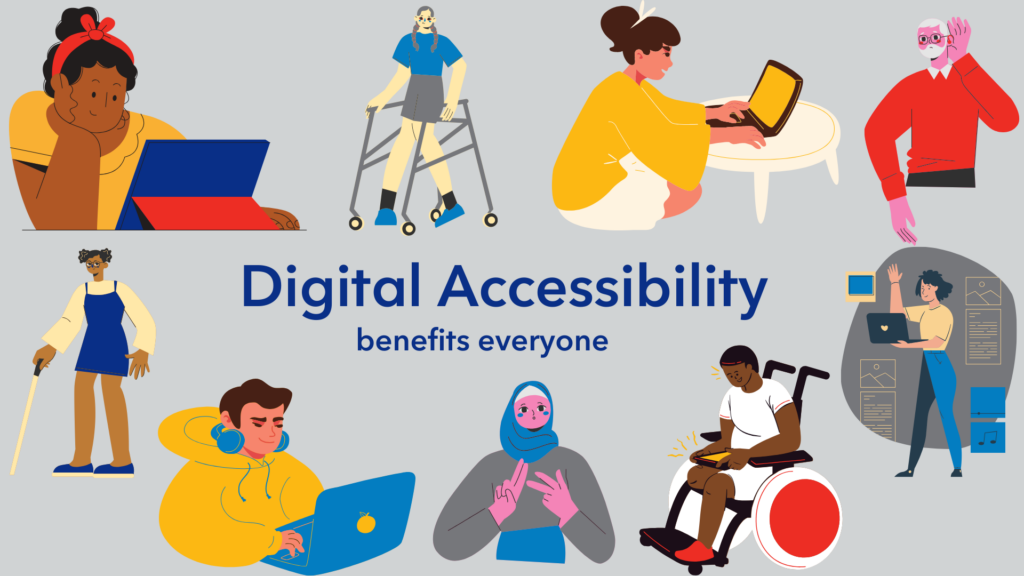
When I think back to my own K to 12 experience, I honestly do not remember accessibility being talked about explicitly. I remember one student who used a laptop for typing because handwriting was painful and slow. I remember another who wore headphones during work blocks. At the time, I did not think of those as assistive technologies. They were just tools that helped those students learn.

Now, after being in classrooms as a teacher candidate, I see how much design choices matter. Accessibility is not just about having a device available. It is about whether the way I design a lesson invites students in or quietly shuts them out.

Assistive Technology Is Not a Bonus

Assistive technology is often framed as something extra, like a support or modification. But for many students, it is the only way they can access the learning in the first place.

In BC classrooms, a significant number of students have identified diverse learning needs. And many more have needs that are not formally diagnosed. When I think about that, I realize that accessibility is not about a small minority. It is about designing for real classrooms.

The Accessibility Practices We Often Miss

Here are a few practices I see overlooked often, including by myself.

1. Alt Text That Actually Describes the Image

I used to think adding alt text meant writing something quick like “students working” or “classroom photo.” Technically, that is alt text. But it is not meaningful.

If the image is conveying important information, the alt text should reflect that. For example, instead of writing “graph,” I could write, “Bar graph showing steady growth in reading scores from September to January, with the largest increase between November and December.” That level of detail changes the experience for someone using a screen reader. It makes the visual content perceivable.

I have also learned that decorative images should have empty alt text so they are skipped. That was something I did not know before. I used to describe everything, which can actually make navigation more frustrating.

2. Headings That Are Just Bigger Fonts

This is one I am guilty of. In Google Docs and WordPress, it is easy to make text bigger and bold and call it a heading. But screen readers rely on actual heading styles to navigate. If I skip from Heading 1 to Heading 3 because it “looks better,” that creates a structural gap.

Using proper heading hierarchy is not about aesthetics. It is about operability. Someone using a screen reader can jump from heading to heading to understand the layout of the page. Without that structure, the page becomes a wall of text.

3. Colour Contrast

I love soft, neutral colours. Light grey text on a white background looks clean to me. But clean does not always mean accessible.

I was surprised to learn how many colour combinations fail contrast checks. Something that looks fine on my laptop might be unreadable for someone with low vision or colour blindness.

This is one of those practices that benefits everyone. High contrast text is easier to read when you are tired, on a small screen, or in bright light.

4. Captions That Are Never Edited

Automatic captions on platforms like YouTube are convenient, but they are not perfect. I have uploaded videos and felt relieved when the captions appeared. Then I actually read them.

Names are wrong. Punctuation is missing. Subject specific vocabulary gets distorted. If a student relies on captions, those errors matter.

Editing captions takes time. But if I am assigning a video as part of learning, that time is part of the work. Accessibility is not an afterthought. It is embedded in the design.

5. PDFs That Are Essentially Photos

This one surprised me. A scanned PDF might look clear and readable to me. But to a screen reader, it can be an image with no readable text.

That means the content is not perceivable unless it is properly formatted with selectable text and tagged structure. I have definitely uploaded PDFs in the past without thinking about that.

Evaluating Tools With Intention

This week also pushed me to think about how we evaluate educational technology. The SAMR model asks whether a tool is substituting, augmenting, modifying, or redefining learning. The Triple E Framework focuses on engagement, enhancement, and extension.

I appreciate how the Triple E Framework forces us to ask whether a tool is actually deepening understanding or just making something look more exciting.

For example, an interactive H5P video might feel innovative. But if students are just clicking through without thinking, it might score high on engagement and low on enhancement. And if that video is not captioned or keyboard navigable, it is also excluding learners.

A tool can be high on the SAMR ladder and still be inaccessible. That realization was important for me because innovation without accessibility is not progress.

Why Accessibility Is Still Overlooked

I think digital accessibility is often missed because it feels invisible. If you are not personally using a screen reader or captions, it is easy to forget they exist.

There is also a perception that accessibility is extra work. Something you do if you have time. But the more I reflect on it, the more I agree with the idea that designing for accessibility is not extra but crucial to student success.

When I imagine a student in my future classroom trying to access a resource I created, I do not want their first experience to be a barrier I accidentally built.

Accessibility is about equity and dignity. And it is about being intentional with every heading, every image, every video, and every colour choice. I am realizing that accessible design is not a checklist I complete at the end. It is a mindset I need to carry into every lesson I create.

Further Information

Here is really useful video on digital accessibility that you can watch to deepen your understanding and bring it into your own work:

Blog #6: AI in the Classroom: A Reflection on our Pro D Workshop

This Friday’s presentation on AI in the classroom left me thinking less about the tools themselves and more about how we talk to students about them. The biggest takeaway wasn’t “use more AI” or “avoid AI”, but t was about balance, literacy, and making sure both students and staff understand what’s actually happening.

Teaching students about AI

One of the most helpful parts of the session focused on how we explain AI to students in ways that make sense to them. A key concept that came up was hallucinations which is when AI generates information that sounds convincing but isn’t true.

Students are already encountering this. They might:

  • Put AI-generated information into homework that isn’t accurate
  • Get confidently written but incorrect answers
  • Ask silly prompts like “animals that live on the moon” and receive detailed responses
  • Ask about an author’s books and get a list—even when those books don’t exist

AI is better than it used to be, but it still isn’t perfect. Helping students understand that AI can sound knowledgeable without actually being correct is essential. The goal is not to scare them away from using it, but to help them use it critically and responsibly.

AI literacy is now part of digital literacy

Another clear message from the presentation was that we need to teach AI literacy the same way we teach media literacy and internet safety.

That means:

  • Explaining what AI is (and isn’t)
  • Showing students how to question outputs
  • Teaching them to verify information
  • Helping them understand when tools are supportive and when they aren’t

This only works if all school staff are on the same page. Everyone in a school community needs to know:

  • Which tools students are using
  • How they’re using them
  • What expectations we’re setting

Consistency matters. If one classroom encourages AI and another bans it without discussion, students receive mixed messages. Open communication among staff helps create shared language and expectations.

The environmental conversation

Another important piece was the environmental impact of AI. Students are often very aware of sustainability, and AI provides a real-world context for discussing energy use and technological responsibility.

The presentation highlighted a few examples:

  • Some countries are placing data centres underground and using the heat to warm homes
  • Others are working to make AI systems more energy-efficient and sustainable
  • Conversations about environmental footprint should include AI alongside everything else we use (Ie. do kids get driven to school every day when they could walk?)

Rather than presenting AI as purely harmful or purely helpful, the focus was on balance and transparency. Students should understand both the benefits and the costs and should be invited into the conversation. Asking them for ideas about sustainability helps them feel involved rather than powerless.

Check out this great video on the impacts of AI on sustainability. It would be a perfect tool to get the conversation started in a high school level class!

Moving forward

My biggest takeaway is that the goal isn’t perfection, but awareness.

We want students to understand that AI can make mistakes and to see it as a support rather than a shortcut. They should feel comfortable asking questions, thinking critically about what they see, and staying curious as they learn. At the same time, we want educators to stay informed, share knowledge with one another, use clear and accessible language, and focus on guiding students’ learning rather than trying to control it.

AI isn’t going away. If anything, it’s becoming more embedded in daily life. Our role is to help students navigate it thoughtfully, ethically, and confidently.


AI literacy lesson ideas & resources:

Below is a great document that could be used for teaching AI concepts in accessible, age-appropriate ways and for helping students build the skills they need to navigate this evolving landscape.

Blog Post #4: Thinking About Google Classroom

Education today feels very different compared to when I was in high school. Back then, technology mostly meant booking time in the computer lab, and feedback or updates usually had to wait until the next class, homeroom, the weekly newsletter, or the PA system. Now, platforms like Google Classroom are part of everyday learning and have shifted how we interact with our students.


Google Classroom and Communication

One of the biggest strengths of Google Classroom is communication. For context, I currently work at Oak Bay High School and help out with the school musical, which has given me a practical look at how Google Classroom is used beyond a typical academic setting. While working on the musical, it has been especially helpful for sharing rehearsal updates, reminders, and resources in one place. Students can quickly check what they have missed or what they need to review.

Posting rehearsal videos has been particularly useful. Students can rewatch choreography or scenes at home, which helps reinforce learning and makes in-person rehearsals more efficient. This kind of instant, organized communication feels much more effective than relying on verbal reminders or printed handouts.

At the same time, there are challenges. With frequent posts and notifications, students can feel overwhelmed or start to tune out information. There is also the issue of access, since not all students have reliable technology all the time and the assumption all students have cellphones or personal laptops. Finally, while online communication is efficient, it does not fully replace quick or more challenging conversations that can sometimes be clearer and more impactful in person.


Instant Feedback and Learning Support

Another feature of Google Classroom that stood out to me is the ability to provide instant feedback. Because assignments are stored in Google Drive, teachers can view student work while it is still in progress and leave private comments before the final submission.

This shifts learning away from a system that focuses only on grades and toward one that values improvement and process. For students who need extra guidance or reassurance, early feedback can make learning feel more supportive and less stressful. It also encourages students to revise and reflect, rather than seeing assignments as one-and-done.

However, there are downsides here as well. Providing ongoing feedback can be time-consuming for teachers, especially in larger classes. There is also the risk that students may rely too heavily on comments instead of developing confidence in their own ideas.

Ultimately, I feel the tool is useful but needs to be carefully and selectively utilized.


A Quick Look at the Benefits

For a clear overview of how Google Classroom supports communication and feedback, check out this short video that explains the benefits well:


Looking Back and Finding Balance

Reflecting on Google Classroom highlights how much education has changed since I was a student. I sometimes worry that we rely too much on technology now, especially compared to when learning was more hands-on and less screen-based. Increased screen time can be distracting, and it can be harder for students to stay focused or engaged when so much learning happens online. There is also the risk that face-to-face communication and problem-solving skills are deprioritized when students rely heavily on digital platforms for answers, feedback, and reminders.

At the same time, I can see the value these tools bring. Google Classroom improves access to information, supports more inclusive feedback, and makes communication clearer and more consistent. The challenge moving forward is finding balance, using technology to enhance learning while still prioritizing human connection and meaningful in-person interaction.

Blog Post #3

Diving into GenAI with a Focus on Arts Education

This week has had me thinking a lot about what learning actually looks like in my classroom and what parts of it simply cannot be replicated or sped up. As a PHE, theatre and dance teacher, so much of my work is built on presence, risk-taking, and trust. Learning happens in bodies moving through space, in voices that shake before they grow steadier, and in the quiet moments where a student realizes they are capable of more than they thought.

With the increasing presence of generative AI in education, I have been reflecting on where this technology fits and where it does not. Rather than asking what GenAI can do, I find myself asking what kind of learning I want to protect. This post explores my thinking around the limitations of GenAI and the ways it might be used thoughtfully within the context of the BC curriculum, particularly in arts-based classrooms where the process matters just as much as the product.

Major limitations of GenAI in Theatre and Dance Classrooms

One of the biggest limitations of GenAI is that it cannot understand context in the way humans do, especially in artistic learning. In theatre and dance, so much of the learning lives in the body, in relationships, and in the room. GenAI can generate text or ideas, but it cannot read energy, notice when a student is holding back, or respond to the emotional risk-taking that is required in performance work. It also cannot make ethical or culturally responsive decisions on its own. In the BC curriculum, learning is deeply connected to identity, community, and personal experience, and GenAI does not truly know the learner or their lived context.

Another limitation is that GenAI can give confident answers that are not always accurate or appropriate. In a creative setting, this can be especially problematic because students may mistake generated ideas for “better” ideas, which can unintentionally flatten originality and voice. There is also the concern of over-reliance. If students use GenAI to generate reflections, scripts, or choreographic ideas without critical engagement, it can interfere with the development of creative thinking, communication, and personal and social responsibility, which are core competencies in the BC curriculum.

Check out this great TEDx talk detailing the impact of GenAi in schools and its impact on arts education. While it isn’t specifically about AI fears, it sends a powerful message about framing why artistic learning and human creativity matter in ways AI can’t replicate.

Possible Use of GenAI in Secondary Theatre and Dance Classes

However, there may be a place for it in our classrooms. In a secondary theatre and dance, I see GenAI as a tool that could support learning but not replace it. It could be useful during the early stages of a project, for example helping students brainstorm themes for a devised theatre piece or offering prompts for movement exploration. It might also support students who struggle with written expression by helping them organize thoughts before writing a reflection, as long as the final work remains their own and is grounded in their embodied experience.

GenAI could also be used by for planning. For example, it could help generate warm-up ideas, discussion questions, or assessment prompts that align with curricular competencies, which I could then adapt to fit my students and my program. In this way, it acts more as a planning assistant than a teaching voice.

That said, I would be very cautious about its use during Secondary performance creation, choreography concept classes, or personal reflection projects. These are moments and years where students are developing confidence, identity, and voice, and those outcomes are central to arts education in BC. In these cases, GenAI risks distancing students from the discomfort and uncertainty that are actually essential parts of the creative process.

Ultimately, used intentionally and transparently, GenAI can be a support tool, but in my classroom, the learning must always remain human, embodied, and relational.

Interactive Videos – Blog Post #2

Task #1: Create an Interactive Video

As an athlete, I am always looking for more drills to add to my toolkit to make me stronger and faster. Check out this video below for some plyometric speed drills that could bring your running to the next level!

Task #2: Reflection

Reflections on using H5P tools

I think H5P tools could be a useful addition at the grade level I hope to teach, but only if they are introduced in a very intentional and self-paced way. From a student perspective, I do find the tool somewhat complicated, especially at first. Because of that, I think students would need time to explore it gradually, with clear instructions and low-stakes practice before being expected to create anything more complex. Without that scaffolding, the technology itself could easily become a barrier rather than a support for learning.

Now that I understand how H5P works as a teacher, I can see its value more clearly, particularly for review and engagement. One of the biggest strengths of H5P is that it helps ensure students do not simply skim through a video or resource. Interactive videos, for example, require students to pause, think, and respond, which aligns well with formative assessment and checking for understanding. In Dance and PHE or Health, this could be especially useful for reviewing movement concepts, injury prevention, or health topics where reflection and comprehension matter more than memorization.

I would also consider having students create simple H5P content themselves, such as a short interactive video explaining a warm up, cool down, or basic movement concept. This aligns with the BC curriculum’s focus on student centered learning, communication, and personal responsibility. However, I would be cautious not to overuse the tool, as I believe it works best as a supplement rather than a core method of instruction.


Using video or audio editing as an assignment medium

Video and audio editing are formats I would be interested to use in Dance and PHE or Health because they align naturally with the content and offer students flexible ways to demonstrate learning. For example, students could create short videos breaking down a dance sequence, explaining how they applied elements of movement/biomechanics, or reflecting on their personal progress and goal setting (Ie. progress with target practice or flexibility in PHE). In Health, audio or video projects could be used for topics such as mental well being, healthy decision making, or strategies for managing stress.

To make these assignments engaging and accessible, I would prioritize simplicity and choice. Students could choose between video or audio, work individually or collaboratively, and use basic editing tools rather than advanced software. I would place more emphasis on reflection, understanding, and connection to learning outcomes than on production quality. Sharing their work with peers through class viewings or small group discussions would help build communication skills and a sense of community, both of which are emphasized in the BC curriculum.

Overall, using video and audio as an assignment medium allows students to take ownership of their learning, reflect on their experiences, and engage in meaningful ways that extend beyond traditional written assessments.

Video Use in the Classroom

This video, “How to Use Video in the Classroom,” offers practical guidance for teachers on integrating video effectively into their teaching. It highlights when video can enhance learning, common pitfalls to avoid, and modern tools that help videos support engagement and understanding. Check it out!

Blog Post #1 – Do We Need to Reimagine Education?

A Physical and Health Education Perspective

Education is changing, or at least, it needs to. Our classrooms and gym spaces are more diverse than ever in culture, language, ability, confidence, motivation, access, and lived experience. When I ask myself if we need to reimagine education, my answer is a clear yes, and I think Physical and Health Education (PHE) is one of the most important places to start.

PHE has real potential to support students in building confidence, connection, and a positive relationship with movement. At the same time, when it is taught using narrow or traditional approaches, it can become a space where students feel excluded or disengaged. Reimagining PHE means rethinking not just what we teach, but how and why we teach it.

In this post, I reflect on two frameworks that have shaped my thinking around reimagining PHE, Universal Design for Learning (UDL) and the BC Health and Physical Education Curriculum. I also explore common barriers educators face when trying to shift pedagogy and engage with current PHE resources and approaches, including Teaching Games for Understanding (TGfU).

Why Changing Pedagogy Is Not Easy

Although many educators recognize that change is needed, shifting pedagogy is not always straightforward. From my experience and observations, some of the most common challenges include limited time and heavy workloads, comfort with familiar practices, and a lack of consistent professional learning opportunities. Systemic constraints such as curriculum expectations, class size, facilities, and access to equipment also shape what is realistically possible in a PHE setting.

Despite these challenges, I believe the benefits of reimagining PHE far outweigh the discomfort that can come with change.

Framework One: Universal Design for Learning

Before diving into UDL, I recommend watching this short video by John Spencer, which clearly explains the idea behind universal design and how it came to be.

At its core, universal design is about creating environments that work for everyone. When barriers are removed for those who need the most support, everyone benefits. Universal Design for Learning applies this idea to education by asking teachers to plan for learner variability from the start, rather than adding accommodations later.

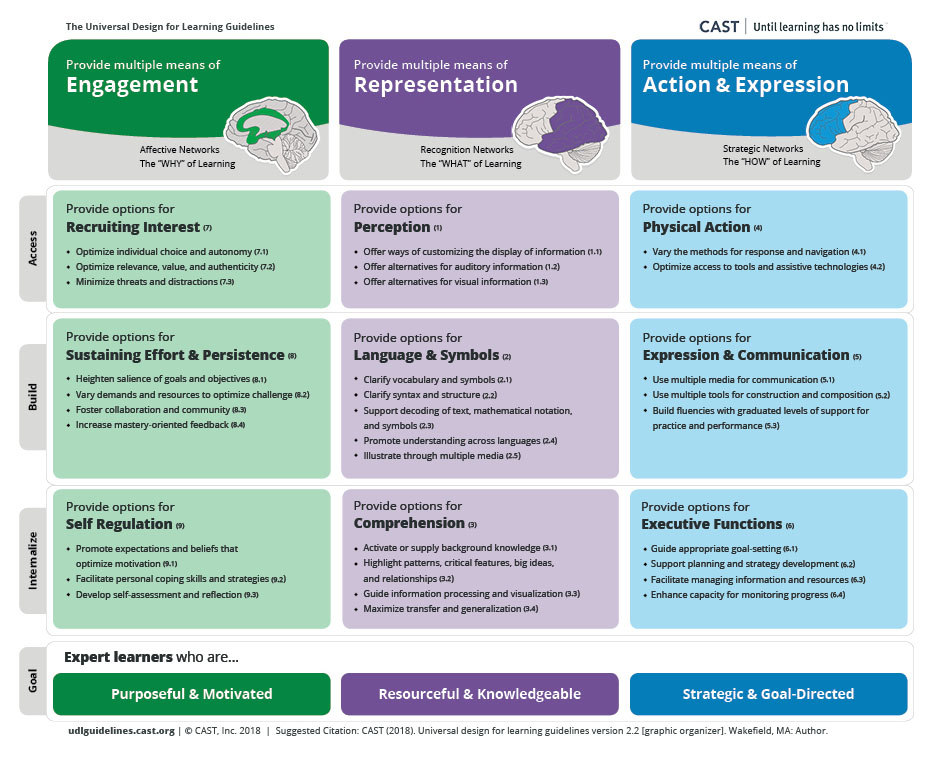
UDL is grounded in cognitive neuroscience and is built around three key principles, representation, engagement, and action and expression. Together, these principles encourage educators to design learning experiences that are accessible, challenging, and meaningful for all students.

Applying UDL in a PHE Setting

To make this more concrete, I want to consider how UDL could be applied in a PHE context using a soccer unit as an example.

Representation

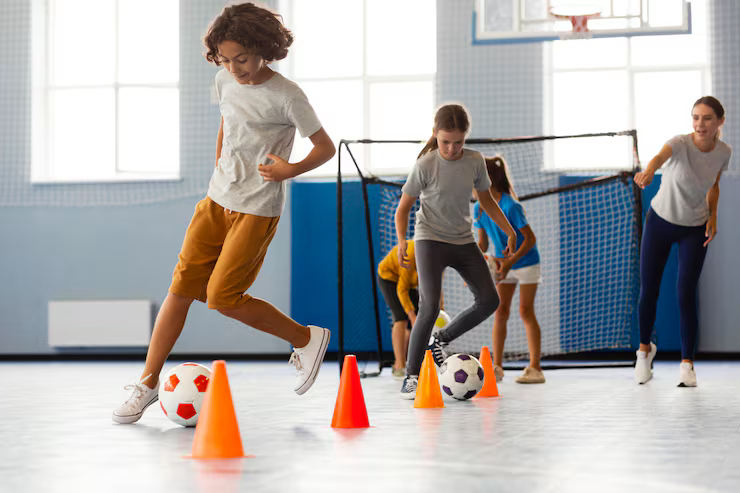
In PHE, representation might involve using multiple ways to explain and demonstrate skills. This could include visual task cards with images or diagrams, live demonstrations paired with clear and simple verbal cues, and adaptive equipment such as different ball sizes, smaller goals, or modified playing areas.

When I was teaching at Rockheights Middle School, visual supports were especially helpful for ESL students who were hesitant to rely solely on verbal instructions. Providing multiple entry points made the activity feel more accessible and less intimidating.

Engagement

Engagement focuses on motivation and student buy in. In a soccer unit, this could involve offering choice through stations or roles within activities, encouraging students to set personal goals and track progress, and using small sided games to promote collaboration and decision making.

When students feel ownership over their learning, they are more likely to participate meaningfully and persist through challenges.

Action and Expression

UDL also asks us to rethink how students show what they know. In PHE, this might mean assessing teamwork, effort, and decision making rather than isolated skill performance, providing flexible timelines for skill development, and allowing students to reflect through video, peer feedback, or short written reflections.

This approach aligns closely with the BC Curriculum emphasis on CAPS, including cognitive, affective, psychomotor, and social learning.

Benefits and Considerations of UDL

UDL offers clear benefits such as increased inclusion, reduced stigma around accommodations, and greater student engagement. At the same time, it requires thoughtful planning and support. Without adequate time or professional development, there is a risk that UDL becomes a checklist rather than a meaningful shift in practice.

Age appropriateness is another important consideration. While UDL is relevant across grade levels, the amount of choice and autonomy should reflect developmental readiness. When digital tools such as video analysis are used, privacy and consent must be carefully considered, particularly when working with younger students.

Framework Two: The BC Health and Physical Education Curriculum

The BC Health and Physical Education Curriculum reflects a shift away from a purely performance based model toward a more holistic view of well being. Rather than focusing only on physical skills or fitness outcomes, the curriculum emphasizes lifelong health, mental well being, and social development.

A central component of the curriculum is the focus on Core Competencies, including communication, thinking, and personal and social responsibility.

These competencies are intended to be developed across subject areas, and PHE provides a particularly rich context for this learning.

Core Competencies in PHE

Communication is practiced constantly in PHE through teamwork, strategy, and peer interaction. Activities such as badminton or cooperative games require students to share ideas, listen actively, and adjust based on others. These skills support not only sport participation but also relationships and emotional well being.

Thinking skills are developed as students make decisions, solve problems, and reflect on what is working and what is not. In sports like tennis or pickleball, students must adapt strategies in real time. These experiences help build confidence and support a more positive relationship with physical activity.

Personal and social responsibility is also embedded in PHE. Students learn sportsmanship, accountability, and respect for others through team based challenges and shared goals. These experiences support empathy and self awareness.

Teaching Games for Understanding

One approach that strongly aligns with reimagined PHE is Teaching Games for Understanding.

TGfU shifts the focus away from isolated drills and toward learning through gameplay. Instead of teaching skills first and hoping students can apply them later, TGfU begins with modified games that highlight tactics, decision making, and purpose.

For example, rather than spending most of a lesson drilling passing techniques, students might begin with a small sided game designed to emphasize spacing or movement. Skills are then refined based on the challenges students encounter during play.

I am drawn to TGfU because it values thinking and understanding just as much as physical execution. It also supports differentiation, as students can engage with the same game at varying levels of complexity.

There are challenges to consider. TGfU can feel uncomfortable for teachers who are used to highly structured lessons, and assessing individual learning within dynamic game contexts can be complex. Younger students may also need additional structure and scaffolding to feel confident in open ended games.

Below is a project I did for a class last semester, drawing upon my personal experience teaching TGFU in the classroom and how beneficial it can be for all teachers to use and implement for their students.

Teaching Styles and Practical Resources

Two additional resources support reimagined PHE in practical ways.

The PE Project provides an overview of teaching styles ranging from direct instruction to guided discovery and problem solving. https://www.thepeproject.com/teaching-styles/

This resource reinforces the idea that no single teaching style fits every situation. Flexibility allows educators to respond to student needs, learning goals, and task complexity.

PHE Canada offers a large library of adaptable physical education activities. https://phecanada.ca/teaching-tools/physical-education-activities

This resource emphasizes inclusion and variety, making it easier for teachers to modify activities for different ages, abilities, and learning goals without starting from scratch.

Personal Reflections

As I continue exploring UDL, TGfU, and the BC Curriculum, I reflect on my own experiences in PHE—as both a student and a teacher candidate. I remember feeling that success in PHE was tied to natural athletic ability: if you were “good at sports,” it was enjoyable; if not, it could feel discouraging. That perspective stayed with me longer than I’d like to admit.

Working with students has challenged that assumption. I’ve seen how small shifts in structure, language, or choice can transform participation. When expectations are clear but flexible, and students feel safe to try without fear of judgment, effort increases, confidence grows, and the focus shifts from comparison to personal growth.

Reimagining PHE has also pushed me to reconsider my own teaching. Letting go of rigid lesson plans, trusting students with more autonomy, and embracing moments of uncertainty is not always easy—but often those moments bring the most meaningful learning, for both students and myself.

Redesigning PHE is not about lowering expectations; it’s about creating learning experiences that meet students where they are and support them in thriving. Frameworks like UDL, the BC Curriculum, and approaches such as TGfU encourage inclusion, understanding, and lifelong well-being. While these shifts require time, support, and reflection, they make PHE a space where all students feel capable, valued, and motivated to move.

I continue to reflect on questions such as how teachers can be better supported in making pedagogical shifts, what meaningful assessment looks like in student-centered PHE, and how to balance structure and flexibility to serve all learners.

Questions for Engagement

While many of the examples I have shared come from PHE, I see UDL as an invitation for reflection across all subject areas. I encourage my fellow teacher candidates to reflect on in their own contexts.

  • How do students access information in your class?
  • Who might be unintentionally excluded by the way content is presented?
  • Where could visuals, models, exemplars, or multiple explanations support understanding?

References and Resources

BC Ministry of Education. Health and Physical Education Curriculum. https://curriculum.gov.bc.ca/

Hopper, T. Teaching Games for Understanding. OPHEA. https://ophea.net/playsport/teaching-games-understanding-tgfu-approach

PHE Canada. Physical Education Activity Database. https://phecanada.ca/teaching-tools/physical-education-activities

Spencer, J. When You Design for Everyone, Everyone Benefits from the Design. YouTube. https://www.youtube.com/watch?v=NL2xPwDrGqQ&t=102s

The PE Project. Teaching Styles in Physical Education. https://www.thepeproject.com/teaching-styles/

© 2026 Alison ROBERTS

Theme by Anders NorenUp ↑